Aortic Aneurysm
Thoracic vs Abdominal Aortic Aneurysms: What You Need To Know?
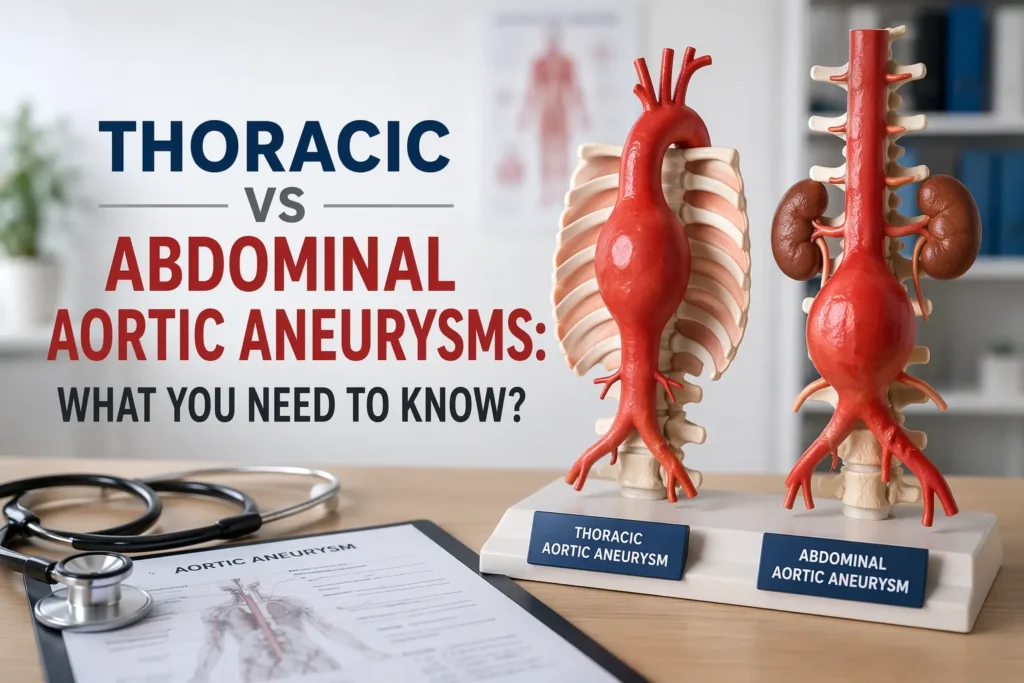
The aortic aneurysm is a lethal disease that requires urgent care because it develops secretly. The two main types of aneurysms include thoracic and abdominal aortic aneurysms. They affect two distinct regions of the aorta. It is vital to distinguish between the two conditions & learn their symptoms and management for early detection. Both diseases result from weakening of arterial walls but differ in their causes and management strategies.
Thoracic vs. Abdominal Aortic Aneurysms: Key Differences Explained
Aneurysm of the aorta occurs when part of the aorta is weakened & swells because of high blood pressure. Aneurysms can be categorized by site of occurrence and usually form slowly without symptoms.
Thoracic Aortic Aneurysms
The thoracic aortic aneurysm occurs in the top part of the aorta that runs through the chest cavity. This part comprises the ascending aorta, aortic arch, & descending thoracic aorta. Thoracic aortic aneurysms can be associated with genetics, connective tissue disease, or hypertension. The extra room in the chest cavity allows for the aneurysm to grow undetected until signs begin to show.
Abdominal Aortic Aneurysms
It occurs in the lower section of the aorta & is located below the diaphragm. They are one of the most commonly occurring aneurysms that result from aging, smoking, & atherosclerosis. High intra-abdominal pressure increases the risk of rupture if left untreated. These types of aneurysms can be detected by doctors during routine examinations and ultrasounds.
Common Symptoms of Aortic Aneurysms
Both types will be symptomless in the early stages, but can develop symptoms as the tumor grows. Early identification of symptoms will prevent life-threatening conditions, such as tumor rupture.
Thoracic Aortic Aneurysms Symptoms
The symptoms of thoracic aortic aneurysms usually become apparent as the aneurysm grows. The patient reported chest & back discomfort and breathing difficulties. There may be coughing, a hoarse voice, or difficulty swallowing due to compression of the surrounding tissues.
Abdominal Aortic Aneurysms Symptoms
It is often accompanied by a pulsing sensation in the abdomen, deep-seated or persistent back pain, or abdominal tenderness.
What Causes Aortic Aneurysms and Who Is at Risk
Aortic aneurysms occur due to weakening of the arterial walls. Various factors can contribute to their development, including lifestyle-related & medically related factors.
Thoracic Aortic Aneurysms Causes
Some of the major reasons for developing thoracic aortic aneurysms include the presence of some hereditary diseases, such as Marfan’s syndrome, hypertension, & connective tissue disorder. Injury or infection could also be a contributing factor.
Abdominal Aortic Aneurysms Causes
The most frequent causes of AAA include atherosclerosis, smoking, & aging. Older men (over 65 years) are more prone to develop an AAA, particularly if they have had any previous problems with their heart. An unhealthy lifestyle and hypertension also contribute significantly to the development of AAA.
When Do Aortic Aneurysms Become Dangerous
The danger arises when the aneurysm reaches a stage at which it could rupture or dissection occurs. The risk increases significantly when the aneurysm becomes large or grows rapidly. Rupturing leads to major bleeding in the body that can result in shock & even death in most cases. Complications from a thoracic aneurysm will involve heart and lung problems, while abdominal aneurysms can bring heavy bleeding in the abdomen.
How Aortic Aneurysms Are Treated
Aneurysm treatments vary based on the size, location, & rate of development of the condition.
Treatment Options For Thoracic Aortic Aneurysms
Monitoring and Medical Management
In the case of small thoracic aortic aneurysms, medical practitioners will opt to conduct repeated scans together with stringent blood pressure monitoring. Drugs assist in minimizing the strain on the aortic walls & slowing down their deterioration. Lifestyle changes, such as stopping smoking, are advised to enhance patient recovery.
Surgical Repair
When an aneurysm grows fast, surgery is needed. In this surgical treatment option, either open surgery, whereby a new segment is implanted, or endovascular surgery, where involving placement of a graft inside the aorta through an artery, may be performed. A surgeon will select the best approach, taking into account the patient’s health status.
Treatment Options For Abdominal Aortic Aneurysms
Endovascular Aneurysm Repair
One method used in endovascular aneurysm repair involves the use of stents. The procedure entails placing stents in aneurysms through small incisions to strengthen the arteries from the inside. This is a minimally invasive procedure with a rapid recovery, resulting in less pain and fewer hospital visits for patients.
Open Surgical Repair
In the procedure of abdominal aortic aneurysm surgery, the dilated aorta portion is replaced by inserting a synthetic graft in open surgery. Although the patient will need more time to recover from this procedure than with endovascular repair, this procedure’s success rate is high.
Thoracic vs Abdominal Aneurysm: Which Is More Serious
Both thoracic and abdominal aortic aneurysms are serious and require medical attention. The level of risk depends on factors such as size, growth rate, and overall health.
Thoracic aneurysms are more complex due to their proximity to the heart, whereas abdominal aneurysms are more common and carry a higher risk of rupture if not monitored.
Timely diagnosis and appropriate treatment are critical in both cases.
Book an Appointment for Aortic Aneurysm Treatment
It is important to understand the distinctions between thoracic & abdominal aortic aneurysms to ensure proper screening & prompt treatment. Although there are some cases wherein both types of aortic aneurysms can occur without any signs, routine screenings can go a long way towards ensuring that patients are diagnosed properly.
In case you are at risk or suspect you have an aortic aneurysm, it would be best to consult a vascular expert. At Encino Vascular Institute, you receive expert diagnosis & treatment for your condition.
Book an appointment with one of our experts and get the best treatment plan for better vascular health.
Frequently Asked Questions
How fast do thoracic aortic aneurysms grow?
Thoracic aortic aneurysms usually grow slowly, often by a few millimeters per year, but growth rates vary with blood pressure, genetics, & overall cardiovascular health.
Can I live a normal life with an aortic aneurysm?
Yes, many people live normal lives with an aortic aneurysm by managing blood pressure, avoiding heavy strain, attending regular checkups, & following their doctor’s advice.
At what age can you get an abdominal aortic aneurysm?
It usually occurs after age 60, especially in men, but younger individuals may develop them due to genetics, smoking, or underlying vascular conditions.
Is screening recommended for aneurysms?
Yes, screening is recommended for high-risk individuals, especially older adults with a history of smoking or cardiovascular conditions.
How long is the recovery after aneurysm surgery?
Recovery varies, but patients undergoing abdominal aortic aneurysm surgery may need several weeks to fully heal.