Aortic Aneurysm
Ascending vs. Descending Aortic Aneurysm: What’s the Difference

An aortic aneurysm is often asymptomatic for years, and locating its position can potentially change the method of treatment and monitoring. Both ascending and descending aortic aneurysms involve a weakened section of the body’s largest artery, but each is characterized by its own location, symptoms, complications, and treatment. Knowing the specific location of an aortic aneurysm is important for patients to understand the gravity of their situation and the possible procedures, including aortic aneurysm surgery or repair, if that is the safest course of action. This guide explains how ascending and descending aortic aneurysms differ, when treatment may be necessary, and what patients in Encino and Los Angeles should know about available treatment options.
Surgery is generally recommended when the risk of rupture or dissection becomes greater than the risks associated with treatment.
What Is an Aortic Aneurysm and Why Does Its Location Matter?
An aortic aneurysm develops when a weakened area of the aortic wall begins to bulge outward. The aorta supplies all organs with life-sustaining oxygenated blood from the heart. As the bulge enlarges, the aorta is at risk of rupturing or dissecting, which is why early detection is vital for your health.
The location of the aneurysm significantly influences monitoring and treatment decisions. Because ascending aneurysms are located close to the heart and aortic valve, they often require more complex treatment than aneurysms farther down the thoracic aorta.
Common risk factors include:
- High blood pressure
- Smoking
- High cholesterol
- Atherosclerosis (hardening of the arteries)
- Family history of aneurysms
- Connective tissue disorders such as Marfan syndrome
- Increasing age
Treating aortic aneurysms depends heavily on the aneurysm’s location. Because of this, physicians evaluate the aneurysm’s location, size, and growth rate to determine whether treatment is needed.
What Is an Ascending Aortic Aneurysm?
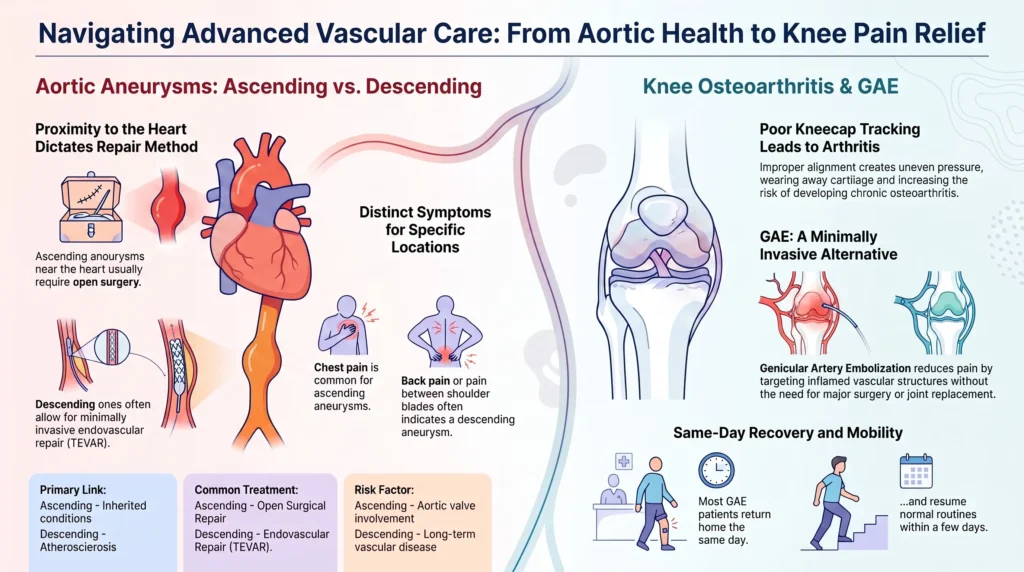
An ascending aortic aneurysm forms in the first portion of the aorta as it leaves the heart. Since this section is closely connected to the heart and aortic valve, enlargement can affect normal blood flow and increase the risk of life-threatening complications.
Many people have no symptoms until the aneurysm becomes larger. When symptoms occur, they may include:
- Chest pain or pressure
- Shortness of breath
- Hoarseness
- Difficulty swallowing
- Fatigue
Common causes include long-standing high blood pressure, inherited connective tissue disorders, bicuspid aortic valve disease, and age-related weakening of the artery wall.
Because ascending aneurysms are located near the heart, they are often treated with aortic aneurysm surgery once they reach a certain size or begin growing rapidly.
What Is a Descending Aortic Aneurysm?
A descending aortic aneurysm develops in the portion of the aorta that travels through the chest after the artery curves away from the heart. Compared with ascending aneurysms, these are more commonly associated with atherosclerosis and long-term vascular disease.
Small aneurysms may not cause noticeable symptoms. As they enlarge, patients may experience:
- Persistent back pain
- Chest discomfort
- Pain between the shoulder blades
- Difficulty breathing
- Difficulty swallowing
Treatment depends on the aneurysm’s size, symptoms, overall health, and risk of rupture. Treatment for aortic aneurysms is individualized and may include regular monitoring, lifestyle changes, medications, endovascular repair, or open surgery. In many suitable patients, Endovascular aortic repair offers a less invasive alternative to conventional open surgery, often resulting in a shorter hospital stay and faster recovery.
How Are Ascending and Descending Aortic Aneurysms Different?
Although both conditions involve enlargement of the aorta, there are several important differences.
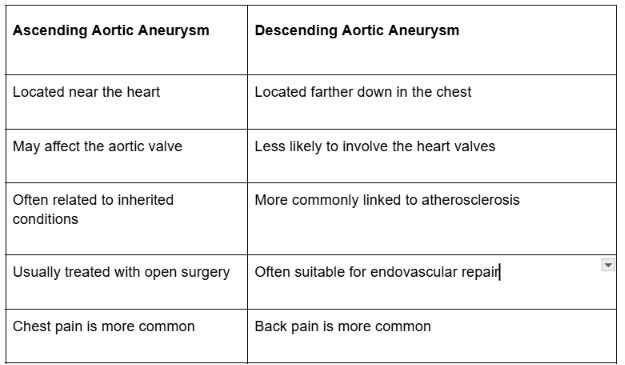
These differences help specialists determine the safest monitoring schedule and select the most appropriate aortic aneurysm repair technique.
When Does an Aortic Aneurysm Require Surgery?
Not every aneurysm requires immediate treatment. Many smaller aneurysms can be safely monitored with routine imaging.
Doctors may recommend aortic aneurysm surgery when:
- The aneurysm has reached a size associated with a higher risk of rupture.
- It grows rapidly over a short period.
- Symptoms such as chest pain or back pain develop.
- There is evidence of an aortic dissection.
- The patient has certain inherited conditions that increase the risk of rupture.
Waiting for too long could potentially lead to complications. In the meantime, there is no need for unnecessary surgery, as monitoring is a much safer option. Each patient is evaluated individually before a treatment plan is recommended.
Open Aortic Aneurysm Surgery
Open surgery has been the standard treatment for many years. During the procedure, the surgeon removes the weakened portion of the aorta and replaces it with a durable synthetic graft.
Open repair is commonly recommended for many ascending aortic aneurysms because it allows direct repair of the affected vessel and, when necessary, nearby heart structures.
Benefits include:
- Long-term durability
- Suitable for complex aneurysms
- Effective for younger patients
Recovery generally requires a longer hospital stay and several weeks of healing.
Endovascular Aortic Aneurysm Repair (EVAR/TEVAR)
Endovascular aortic repair is a minimally invasive procedure performed through small incisions in the groin. A catheter is used to position a stent graft inside the weakened section of the aorta, reinforcing the vessel from within.
Potential advantages include:
- Smaller incisions
- Less blood loss
- Shorter hospital stay
- Faster recovery
- Earlier return to daily activities.
When discussing Aortic Aneurysm Repair Options: Stent Grafts vs. Open Surgery, vascular specialists consider the patient’s anatomy, aneurysm location, age, and overall health before recommending the best approach.
Which Repair Method Is Used for Ascending vs. Descending Aneurysms?
Ascending aneurysms usually require open surgical repair because of their proximity to the heart and aortic valve.
Descending thoracic aneurysms are often suitable for TEVAR, although some complex cases still require open surgery. The final treatment plan is based on detailed imaging and evaluation by an experienced vascular team.
How Do Doctors Diagnose an Ascending or Descending Aortic Aneurysm?
Diagnosis begins with a thorough medical history and physical examination, but imaging tests provide the most accurate information.
Common diagnostic tools include:
- CT angiography (CTA) for detailed images of the aorta
- MRI for evaluating blood vessels without radiation
- Echocardiography, especially for ascending aneurysms
- Chest X-ray in selected cases
- Ultrasound for certain portions of the aorta
These tests help doctors determine:
- The exact location
- The aneurysm’s size
- Whether it is enlarging
- Signs of dissection or rupture
- The most appropriate treatment strategy
Regular follow-up imaging is essential for aneurysms that do not yet require intervention.
When Should You See a Vascular Specialist in Encino, Los Angeles?
You should seek medical evaluation if you experience persistent chest pain, unexplained upper back pain, difficulty breathing, or have a family history of aortic aneurysms. Individuals with high blood pressure, a history of smoking, or connective tissue disorders should also consider early screening. If an aneurysm is diagnosed, regular follow-up with a vascular specialist is essential to monitor its growth and determine the most appropriate treatment, which may include careful surveillance, Endovascular aortic repair, or aortic aneurysm surgery, depending on the aneurysm’s size, location, and overall risk. Patients who are returning to work after aortic aneurysm surgery should discuss their recovery with their surgeon, as the timing varies based on the procedure performed, overall health, and job responsibilities. If you live in Encino, Los Angeles, consulting a vascular specialist can help you receive an accurate diagnosis, a personalized treatment plan, and guidance on What Not to Do With an Aortic Aneurysm: Safety Rules to Follow, helping reduce the risk of serious complications while supporting long-term vascular health.
Why Choose Encino Vascular Institute for Aortic Aneurysm Care?
At Encino Vascular Institute, the treatment a patient receives is based on the appropriate care for the type, size, and location of their aortic aneurysm. Our team uses advanced imaging and detailed vascular evaluations to determine whether monitoring, endovascular repair, or surgery is the safest option for each patient. Treatment recommendations are based on detailed imaging findings, aneurysm characteristics, and each patient’s overall health. When appropriate, minimally invasive options may be considered to reduce recovery time and procedural risk. This is maintained throughout the process from an initial diagnosis to the most appropriate type of follow-up.
Book a consultation with Encino Vascular Institute today to discuss your symptoms, understand your treatment options, and receive expert guidance for your vascular health.
Frequently Asked Questions
How Quickly Can an Aortic Aneurysm Grow?
The growth rate varies from person to person. Some aneurysms remain stable for years, while others enlarge more rapidly due to factors such as high blood pressure, smoking, or certain genetic conditions. Regular imaging is the best way to monitor changes and determine when treatment may be needed.
Is Traveling With an Aortic Aneurysm Safe?
In many cases, yes. If your aneurysm is small and stable, your doctor may approve travel. However, anyone with a large aneurysm, recent symptoms, or a scheduled procedure should discuss travel plans with their vascular specialist before making arrangements.
Can Exercise Help or Hurt With an Aortic Aneurysm?
Moderate, doctor-approved exercise can support heart and vascular health by helping control blood pressure and maintain a healthy weight. Heavy weightlifting, high-intensity workouts, or activities that sharply increase blood pressure may not be recommended. Always follow your healthcare provider’s guidance.
When Do You Need Surgery for an Aortic Aneurysm?
Surgery is generally considered when an aneurysm reaches a size that increases the risk of rupture, grows quickly, or causes symptoms such as chest or back pain. Your vascular specialist will also consider your age, overall health, and the aneurysm’s location before recommending treatment.
What Size Aortic Aneurysm Should I Be Concerned About?
There is no single size that applies to everyone. The need for treatment depends on the aneurysm’s location, growth rate, symptoms, and your overall health. Your doctor will use imaging studies and established clinical guidelines to determine when close monitoring or intervention is appropriate.