Thoracic Outlet Syndrome
Which Type of Thoracic Outlet Syndrome Symptoms Are You Facing – Nerve, Vein, or Artery?
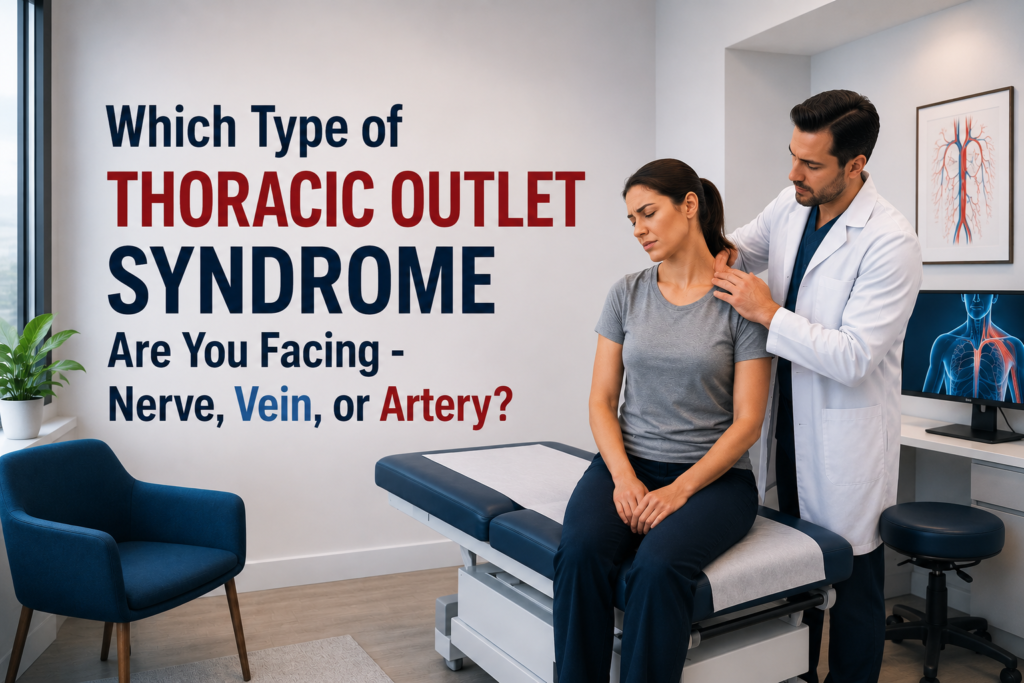
Thoracic Outlet Syndrome can cause pain, numbness, tingling, weakness, swelling, and poor circulation in the neck, shoulders, arms, and hands. These symptoms occur when nerves or blood vessels become compressed near the collarbone. Many people mistake TOS for muscle strain, poor posture, or stress, which can delay proper diagnosis and treatment. If left untreated, TOS may lead to chronic pain, reduced arm mobility, nerve damage, and circulation problems. Depending on the nerves or blood vessels affected, TOS is usually classified into three types: neurogenic, venous, and arterial.
What is Thoracic Outlet Syndrome?
It occurs when nerves or blood vessels become compressed between the collarbone and first rib. This pressure can cause pain, numbness, weakness, swelling, and circulation problems that affect daily activities.
It refers to a condition in which nerves and blood vessels are compressed in the space between the collarbone and the first rib. There are different types of Thoracic Outlet Syndrome, including neurogenic, venous, and arterial. Some causes of Outlet Syndrome include poor posture and heavy lifting, among others.
Which Types of Thoracic Outlet Syndrome Affect Nerves, Veins, or Arteries?
Patients present with varied signs and symptoms. While some patients may experience tingling and numbness, others may present with symptoms such as swelling, arm fatigue, and poor blood circulation. This is because of the different types of thoracic outlet.
The condition is generally divided into three main types:
- Neurogenic Thoracic Outlet Syndrome – affects the nerves connected to the shoulder, arm, and hand.
- Venous Thoracic Outlet syndrome – affects the veins that carry blood back from the arm.
- Artery Thoracic Outlet Syndrome – affects the arteries that supply blood to the arm and fingers.
Some of its possible symptoms include:
- Tingling in fingers
- Weak grasp
- Pain in the shoulder or neck
- Numbness of the arm
- Muscular weakness
Whereas venous thoracic outlet may be associated with swelling and easily visible veins, arterial TOS can lead to poor circulation in the arm, resulting in coolness, weakness, or pain.
Early diagnosis of such symptoms can help patients receive proper treatment before their quality of life is affected by this medical condition.
What Are the Major Signs of Thoracic Outlet Syndrome?
The symptoms associated with TOS tend to appear all of a sudden, with some becoming painful after a short period. Vein compression obstructs blood flow from the arm back to the heart.
They include:
- Swelling in one arm
- Blue or purple discoloration of the skin
- A heavy feeling in the arm
- Enlarged veins near the chest or shoulder
- Tightness and discomfort while moving the arm
These symptoms usually become apparent to many people after engaging in physical activities, such as weight training, sports, and even long hours of work. At times, poor posture may contribute to pressure buildup in the shoulder region.
Early diagnosis is important because untreated vascular compression can lead to serious circulation problems, making it essential to seek thoracic outlet treatment near you as soon as symptoms appear.
Which Treatment Is Best for Long-Term Relief?
Treatment for right-sided syndrome depends on the mechanism involved as well as the severity of the condition. Some people respond to therapy and lifestyle modifications, but there are other cases that need specialized medical attention.
Treatments may include:
- Exercises to correct posture and build up the strength of the shoulders
- Stretching exercises to relieve pressure on the nerves
- Pain-relieving therapies
- Modification of activities and lifestyle
- Anti-inflammatory drugs, if required
In severe cases involving blood vessels, especially venous or arterial thoracic outlet, surgery may be needed to relieve compression and restore normal blood circulation.
Proper thoracic outlet syndrome treatment for the condition when it is still in its early stages may help prevent nerve damage and long-term pain.
What Is the Main Cause of Thoracic Outlet Syndrome?
The primary cause of thoracic outlet involves compression of the blood vessels and or nerves between the collar bone and the first rib. Compression may result from gradual processes or trauma.
Some of the most common causes include:
- Poor posture
- Repetitive arm movements
- Heavy lifting
- Sports injuries
- Car accidents or physical trauma
- Anatomical abnormalities such as an extra rib
People searching for what outlet syndrome is are often surprised to learn that even daily habits can contribute to the condition. Sitting for long hours, carrying heavy bags, or repeatedly using the shoulders may slowly trigger symptoms over time.
Why Choose Encino Vascular Institute for Thoracic Outlet Syndrome Treatment in Los Angeles?
Finding the right specialist for thoracic outlet syndrome treatment in Los Angeles can make a significant difference in recovery and overall comfort. Encino Vascular Institute offers specialized care for patients experiencing severe or long-term Symptoms related to nerve, vein, or artery compression.
Our highly skilled team focuses on identifying the true source of the pain before developing a suitable thoracic outlet treatment plan to address it.
Regardless of whether you have a problem with neurogenic, venous, or arterial TO Syndrome, diagnosis is very crucial for effective treatment.
Encino Vascular Institute uses advanced techniques to diagnose your condition and provide treatment that helps alleviate pain and improve your blood flow. Our team focuses on identifying the exact source of nerve or vascular compression before recommending treatment.
Schedule Your Consultation Today
Contact us today to schedule your consultation and receive personalized treatment in Los Angeles designed for long-term relief and improved mobility.
Frequently Asked Questions
What Happens if Thoracic Outlet Syndrome Is Left Untreated?
Without treatment, outlet syndrome will deteriorate further and might develop into chronic pain, damaged nerves, weakness of muscles, circulation issues, or even blood clots, depending on which region it affects.
Is It Possible for Bad Posture to Make TOS Symptoms Worse?
Absolutely, bad posture puts extra pressure on the neck and shoulders, worsening symptoms of TOS.
What is the Management for Symptoms of Chronic TOS?
Symptoms of chronic TOS can be managed through physical therapy, proper posture, exercise, avoiding repeated shoulder movements that may cause strain, and medical treatment.
Is Surgery Required for Managing Severe Thoracic Outlet?
Surgery is often recommended only in cases that involve the compression of the nerves or blood vessels, despite undergoing other treatment options such as therapy and exercise.
How to Avoid Thoracic Outlet Syndrome Recurrence?
The risk of recurrence of TOS can be reduced through proper posture, regular exercise, avoidance of repetitive strain, and strict adherence to the physician’s recovery advice.