Varicose Veins
How Can Varicose Vein Treatment Improve Leg Pain and Swelling?
Varicose vein treatment can reduce leg pain, aching, heaviness, and swelling when these symptoms stem from abnormal blood flow through damaged veins. Treatments such as endovenous ablation, foam sclerotherapy, and other minimally invasive procedures can close or treat unhealthy veins, redirecting blood through healthier veins. The appropriate treatment depends on the vein involved, the severity of venous reflux, symptoms, ultrasound findings, and the patient’s overall health.
Key Takeaways
- Varicose veins can cause aching, heaviness, pain, itching, and swelling.
- Treatment focuses on addressing abnormal blood flow, not just the visible veins.
- Thermal ablation uses heat to close certain problem veins from inside.
- Not every person with varicose veins needs an invasive procedure.
- A vascular evaluation and venous ultrasound can help guide treatment decisions.
For people seeking varicose veins treatment in Los Angeles, a qualified vascular specialist can evaluate whether symptoms are related to venous insufficiency and determine the most appropriate treatment approach.
Can Varicose Vein Treatment Reduce Leg Pain and Swelling?
Yes, varicose vein treatment can improve symptoms such as pain and swelling when they’re associated with venous reflux or other venous disease.
Varicose veins develop when the valves inside the veins don’t work properly. Instead of moving efficiently back toward the heart, some blood can flow backward and pool in the legs. This increased venous pressure can contribute to symptoms such as aching, heaviness, swelling, itching, and discomfort.
Treatment is intended to address the abnormal vein or blood flow contributing to the problem.
How Treatment May Help
Depending on the diagnosis and procedure, treatment may:
- Reduce pressure in affected superficial veins.
- Improve blood flow through healthier veins.
- Decrease leg aching and heaviness.
- Help reduce swelling associated with venous disease.
- Treat problematic veins that are contributing to symptoms.
- Make standing and walking more comfortable for some patients.
The goal is not simply to remove a visible vein. A vascular specialist first needs to determine why the vein is abnormal and whether treatment is medically appropriate.
Why Do Varicose Veins Cause Leg Pain and Swelling?
Healthy leg veins contain valves that help direct blood toward the heart. When these valves become incompetent, blood can flow backward, a condition commonly called venous reflux.
Over time, increased pressure in the veins can contribute to symptoms including:
- Aching or throbbing
- Leg heaviness or tiredness
- Swelling around the ankles or lower legs
- Itching or burning
- Muscle cramps
- Visible enlarged or twisted veins
More advanced venous disease can also involve skin discoloration, inflammation, bleeding, or venous ulcers.
That is why persistent or troublesome symptoms shouldn’t be treated as a cosmetic concern.
How Is Varicose Vein Treatment Selected?
No single procedure is appropriate for everyone.
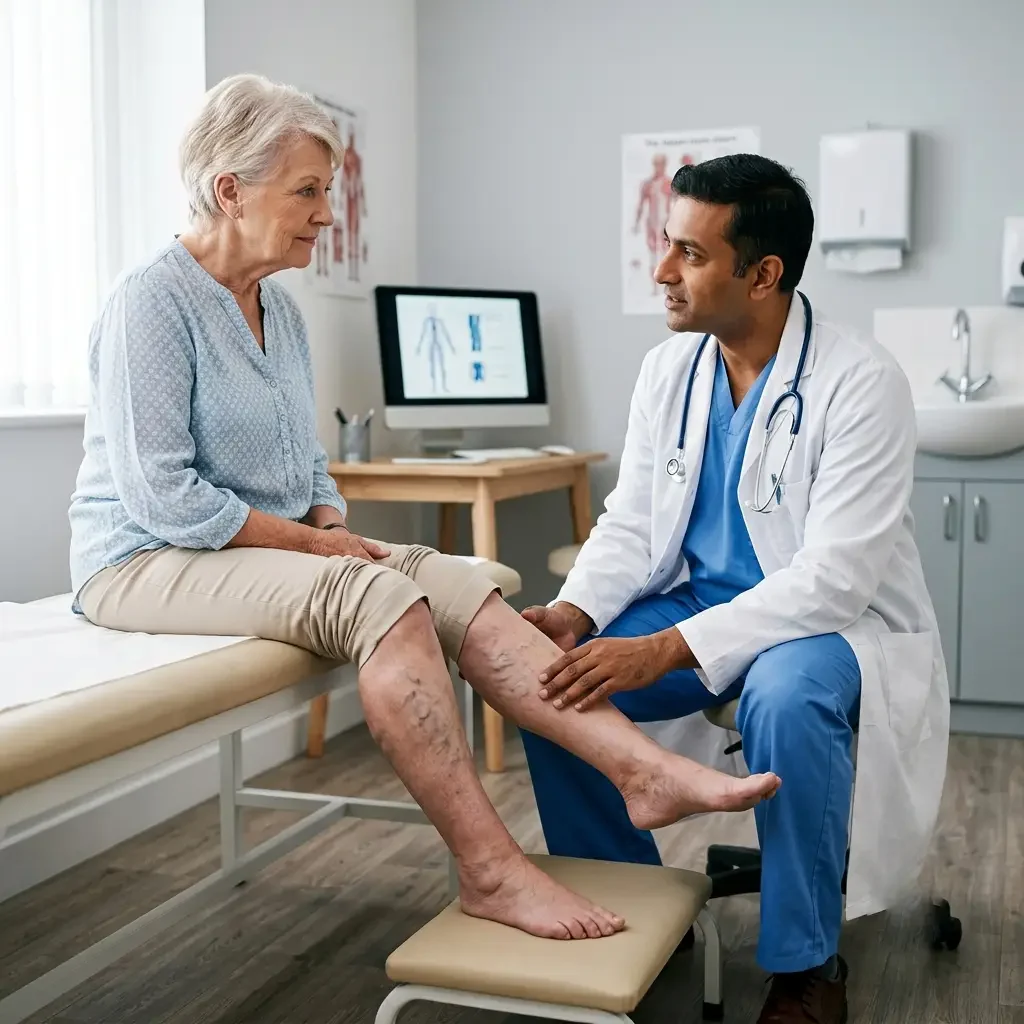
A vascular vein specialist may review your medical history, symptoms, physical examination, and venous imaging before recommending treatment.
A duplex ultrasound can help identify abnormal blood flow and determine which veins are affected.
Depending on the findings, treatment may include:
Endothermal Ablation
Endothermal ablation uses thermal energy to close an affected vein. Common approaches include radiofrequency ablation (RFA) and endovenous laser treatment (EVLT/EVLA).
NICE guidance describes endothermal ablation as a treatment in which heat is applied inside the vein, causing it to close.
Ultrasound-Guided Foam Sclerotherapy
A medical sclerosant is injected into an appropriate vein under ultrasound guidance. The sclerosant closes the treated vein, allowing blood to be redirected through healthier veins.
This may be considered when thermal ablation is not appropriate or depending on the patient’s venous anatomy and treatment plan.
Surgical Treatment
Traditional surgical approaches, including ligation and stripping, may still have a role in selected patients when less invasive treatments are unsuitable.
A professional vascular assessment, not just the appearance of the veins, should determine the appropriate option.
How Do Vein Doctors Use Thermal Energy to Close Veins?
During thermal ablation, a physician uses ultrasound guidance to position a catheter inside the targeted vein. Radiofrequency or laser energy heats the inside of the vein.
The heat causes the vein to close. Blood can then be redirected through other healthy veins.
Thermal ablation differs from treating only the visible surface of a varicose vein because it targets an underlying vein that may contribute to abnormal blood flow.
The exact technique, anesthesia, catheter type, treatment length, and aftercare depend on the patient’s anatomy and clinical circumstances. NICE identifies radiofrequency and laser ablation as forms of endothermal treatment.
Can Massage Help With Varicose Vein Symptoms?
Massage may feel temporarily soothing for some people, but it does not correct damaged venous valves or eliminate the underlying venous reflux that causes many varicose veins.
If you have significant swelling, pain, skin changes, or another vascular concern, it is better to have a healthcare professional evaluate the cause before relying on massage or other self-care measures.
Depending on the diagnosis, a healthcare professional may discuss options such as physical activity, leg elevation, compression therapy, or an appropriate vein procedure.
How Many Treatment Sessions Will I Need?
There is no universal number of treatment sessions.
Some patients may need one procedure, while others may require additional treatment for remaining or recurrent veins. The number of sessions can depend on:
- The number of affected veins
- The size and location of the veins
- The severity of venous reflux
- The treatment technique used
- Whether tributary veins also require treatment
- How the veins respond after the initial procedure
NICE patient guidance specifically notes that patients may need more than one treatment session and that new varicose veins can develop after treatment.
Your vein specialist doctor can provide a more individualized estimate after reviewing your ultrasound and treatment plan.
Does Medicare cover Varicose Vein Treatment?
It can be, when the treatment meets Medicare’s medical-necessity and coverage requirements.
CMS coverage policies describe circumstances in which treatment of symptomatic varicose veins may be considered medically necessary. Examples can include significant pain or edema affecting daily activities, bleeding, recurrent superficial phlebitis, stasis dermatitis, or refractory dependent edema. Documentation and other requirements may also apply.
Medicare generally excludes cosmetic treatment of asymptomatic varicose veins.
Coverage can vary according to the applicable Medicare policy, medical documentation, procedure, and individual circumstances. Patients should confirm coverage and potential out-of-pocket costs with their healthcare provider and Medicare plan before treatment.
What Are the Side Effects of Varicose Vein Treatment?
Side effects depend on the procedure used.
After minimally invasive vein treatment, some patients may experience temporary:
- Bruising
- Tenderness
- Mild pain or discomfort
- Swelling
- Skin irritation or changes
- A feeling of tightness along the treated vein
Although uncommon, some vascular procedures can have more serious complications, and the risks vary by treatment and individual patient factors.
Your doctor should explain the potential benefits, risks, alternatives, and expected recovery before treatment.
If you develop sudden severe leg swelling, significant chest pain, difficulty breathing, heavy bleeding, or other concerning symptoms, seek urgent medical attention.
When Should You See a Varicose Veins Specialist?
Consider discussing your symptoms with a vascular surgeon, vascular vein specialist, or qualified vein doctor if varicose veins are accompanied by:
- Persistent leg pain or aching
- Swelling that keeps returning
- A heavy or tired feeling in the legs
- Itching or burning
- Skin discoloration or irritation
- Bleeding from a varicose vein
- A sore or ulcer that does not heal
- Painful, hard superficial veins
Clinical guidance recommends referral to a vascular service for symptomatic varicose veins or complications such as bleeding, skin changes, or ulcers.
Why Choose Encino Vascular Institute for Varicose Vein Care?
Encino Vascular Institute provides vascular and vein care in Encino for patients from Los Angeles and surrounding communities. The practice lists varicose vein treatment and venous insufficiency among its clinical services. It identifies Dr. Farshad Malekmehr as a board-certified cardiovascular surgeon with an interest in vascular conditions including varicose veins.
The practice also states that it serves patients in Encino, Sherman Oaks, Tarzana, Van Nuys, Burbank, Calabasas, Glendale, Woodland Hills, and other communities in the greater Los Angeles area.
Patients can discuss their symptoms and treatment options with the vascular team to determine whether further evaluation or treatment is appropriate.
Schedule a Varicose Vein Evaluation in Los Angeles
If leg pain, heaviness, or swelling affects your daily activities, don’t assume varicose veins are only a cosmetic concern. A proper vascular evaluation can help identify whether venous reflux or another vascular condition is contributing to your symptoms.
Frequently Asked Questions
Can varicose vein treatment reduce leg swelling?
It can, particularly when swelling is associated with venous reflux or other venous disease. Treatment addresses the abnormal vein or blood flow contributing to symptoms, but improvement varies by patient.
What doctor should I see for painful varicose veins?
A vascular surgeon or vascular vein specialist can evaluate painful varicose veins and determine whether venous reflux or another vascular problem is responsible. A duplex ultrasound may be used as part of the evaluation.
Is thermal ablation painful?
Thermal ablation is a minimally invasive procedure, and local anesthetic is commonly used. Patients may experience some temporary tenderness, bruising, or discomfort afterward. Your physician should explain the expected sensations and potential risks before treatment.
Will varicose veins come back after treatment?
Treatment can close or treat the targeted abnormal vein, but it cannot guarantee that new varicose veins will never develop. NICE notes that new varicose veins may develop after treatment, and some patients may require additional treatment sessions.
When should I see a vein specialist for leg swelling?
Persistent or recurrent swelling, especially when accompanied by pain, heaviness, visible varicose veins, skin changes, bleeding, or ulcers, warrants medical evaluation. A vascular specialist can determine whether the swelling is related to venous disease or another condition.