Knee Osteoarthritis
Knee Tracking Issues and Osteoarthritis: Can GAE Help?

Pain that inhibits normal walking, climbing stairs, or even standing up after sitting can be a sign that you are dealing with more than just the normal difficulties that accompany aging. Most often, these symptoms point to osteoarthritis. As knee tracking issues worsen, more pain will be brought on by uneven stress on the joint. If you are searching for Knee Osteoarthritis Treatment, it is important to understand the relationship between these issues to find the treatment that best meets your needs. While physical therapy, medications, and injections remain common treatment options, minimally invasive procedures such as Genicular Artery Embolization (GAE) are gaining attention for selected patients with persistent pain.
For individuals in Encino, Los Angeles, learning when GAE may help and when other treatments are more appropriate can make it easier to have informed conversations with a healthcare specialist about managing knee osteoarthritis.
Why Does Your Kneecap Feel Like It Doesn’t Move Correctly?
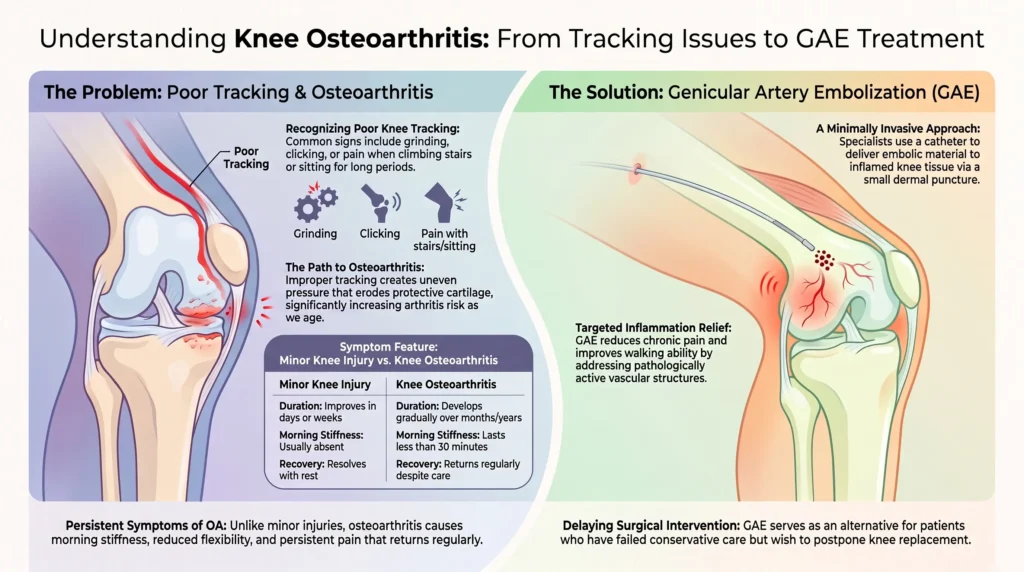
The patella (kneecap) runs along the groove in the anterior aspect of the femur and is designed to slide and run along the groove when the knee flexes and extends. Displacement along the groove is called patella tracking. Pressure on the cartilage and surrounding tissues can cause discomfort during activities of daily living.
Common signs of poor knee tracking include:
- Pain while climbing or descending stairs
- A grinding or clicking sensation in the knee
- Pain after sitting for long periods
- A feeling that the kneecap slips or catches during movement
- Mild swelling around the front of the knee
Several factors can contribute to knee tracking problems, including muscle weakness, previous injuries, differences in leg alignment, or gradual cartilage wear. Identifying the underlying cause is important because treatment depends on what is affecting the joint.
Can Knee Tracking Problems Lead to Osteoarthritis?
Yes, they can also lead to Knee Osteoarthritis over time. When the kneecap tracks improperly, uneven pressure is applied to the joint. This stress is not evenly distributed. Over time, this situation will likely wear away the protective cartilage and increase the risk of developing osteoarthritis.
Not everyone with a tracking issue develops arthritis, but the risk is higher when other factors are present, such as:
- Aging
- Excess body weight
- Previous knee injuries
- Family history of osteoarthritis
- Repetitive activities that place stress on the knee
Deteriorated cartilage will increase pain and limit the joint’s range of motion.
What Symptoms Suggest Knee Osteoarthritis Instead of a Simple Knee Injury?
A minor knee injury usually improves over several days or weeks with rest and appropriate care. Knee Osteoarthritis develops gradually and often becomes more noticeable over months or years.
Symptoms that may point toward osteoarthritis include:
- Persistent knee pain that returns regularly
- Morning stiffness lasting less than 30 minutes
- Swelling after activity
- Reduced flexibility
- Grinding or cracking sounds during movement
- Pain that increases after prolonged standing or walking
If symptoms continue despite conservative care, medical evaluation can help determine whether arthritis is the underlying cause.
Which Knee Osteoarthritis Treatment Options Are Available Before Surgery?
Many patients can manage symptoms without immediately considering Knee Osteoarthritis Surgery. The right approach depends on the severity of joint damage, pain level, and overall health.
Common Treatments for Knee Osteoarthritis include:
- Physical therapy to improve strength and joint stability
- Weight management to reduce pressure on the knee
- Activity modification
- Anti-inflammatory medications when appropriate
- Corticosteroid or hyaluronic acid injections
- Knee braces or supportive devices
For patients whose pain continues despite these treatments, minimally invasive options may be considered before osteoarthritis knee replacement surgery.
What Is Genicular Artery Embolization, and How Does It Work?
Genicular Artery Embolization is a cutting-edge, minimally invasive treatment for arthritic knees that targets chronic inflammation driven by pathologic, angiogenically active vascular structures. During GAE, an interventional specialist uses a catheter to access the inflamed knee tissue and administer embolic material to the inflamed vascular structures.
It may relieve knee pain from chronic inflammation of the knee tissues and help preserve the knee joint. The procedure is a small dermal puncture as opposed to a large surgical incision, making GAE a less invasive alternative.
Can GAE Improve Pain Caused by Knee Osteoarthritis and Tracking Issues?
GAE is designed to reduce pain associated with inflammation caused by Knee Osteoarthritis. While it does not correct kneecap alignment or restore damaged cartilage, reducing inflammation may improve comfort and ease movement for some patients.
Research suggests that carefully selected individuals may experience:
- Reduced chronic knee pain
- Improved walking ability
- Better daily function
- Less reliance on pain medications
- Delayed need for Knee Osteoarthritis Surgery in some cases
A thorough medical evaluation is necessary to determine whether Genicular Artery Embolization is an appropriate option.
What Should You Expect During Recovery After GAE?
GAE targets inflammation in tissues due to knee Osteoarthritis. This does not improve ankle alignment nor restore knee cartilage, but the reduction of inflammation and increased vascular flow may rehabilitate knee mobility.
It may provide the following benefits to a carefully selected patient population:
- Reduction in chronic knee pain
- Improvement in ambulation
- Improvement in activities of daily living
- Improvement in pain medication dependence
- Delay of the need for surgical intervention for Knee Osteoarthritis in select patients
A detailed medical history is required to determine whether GAE is a treatment option.
What is the Best Treatment for Osteoarthritis in the knees?
There is no single best treatment for knee osteoarthritis. The arthritis stage, symptoms, the individual’s activity level, overall health, and treatment objectives impact the most appropriate solution.
A combination of physical therapy, weight control, medications, and injections relieves symptoms in many patients. Minimal-intervention procedures, such as Genicular Artery Embolization, may be appropriate when conservative measures no longer sufficiently relieve symptoms. Advanced degeneration of the knee joint with pain and dysfunction may warrant osteoarthritis knee replacement surgery as the best long-term option. A custom assessment is the best way to determine the most appropriate solution for optimal, lasting results.
Why Choose Encino Vascular Institute for Knee Osteoarthritis Treatment?
At Encino Vascular Institute, the assessment of symptoms, history, and treatment objectives is the first step in our process; care is not offered until this assessment is complete. Our staff has a wealth of experience in assessing patients with knee osteoarthritis. From this experience, we determine if conservative methods are appropriate or if Genicular Artery Embolization will relieve symptoms. We provide custom treatment plans based on verifiable data to meet your health and lifestyle goals, while focusing on pain relief and preserving the most function in the knee.
If you are limited in your daily activities due to chronic knee pain, schedule a consultation with us to learn if Genicular Artery Embolization is a potential option.
Frequently Asked Questions
Pain Above Knee When Sitting Down: Should I Get GAE?
Pain above the knee while sitting can have several causes, including muscle strain, tendon problems, or osteoarthritis. It is not appropriate for every type of knee pain. A thorough evaluation, including imaging and a physical examination, is needed to determine whether inflammation from knee osteoarthritis is the source of your symptoms.
After GAE: What Daily Life Actually Looks Like?
Most patients return home the same day and gradually resume normal routines within a few days. Walking is usually encouraged, while strenuous exercise may be limited temporarily. Pain relief often develops over several weeks, allowing many people to become more active with greater comfort.
Should I Get GAE or Wait for Newer Treatments?
If conservative treatments are no longer providing relief, it may not be necessary to postpone care while waiting for future therapies. It has shown promising results for selected patients with knee osteoarthritis. A specialist can help you compare available options based on your condition and treatment goals.
Is Genicular Artery Embolization a Permanent Solution?
GAE is intended to reduce pain by decreasing inflammation, but it does not reverse cartilage damage or cure knee osteoarthritis. The duration of symptom relief varies from person to person, depending on arthritis severity, activity level, and overall joint health.
Can You Have GAE Multiple Times if Pain Returns?
In some cases, repeat GAE may be considered if symptoms return and you remain an appropriate candidate. The decision depends on your medical history, current imaging findings, previous treatment response, and overall knee condition. Your specialist can determine whether repeating the procedure is suitable.